In an effort to interest students in the often-impressive exhibits and holdings at the Dallas Museum of Art and the Kimbell Art Museum (and others), I'm making an effort to post information on events and to link this blog to class schedules and course home pages. I hope to do this bi-monthly.
It sometimes amazes me how little time my students spend looking at the real thing--as opposed to digital images projected on a screen. I hope that by alerting you all to current events I can remedy this situation. Most area museums offer free entry to their permanent collections, and often provide free-entrance days or reduced prices to special exhibits for students. Check home pages to find out when.
Most of the offerings listed below are focused on topics covered in Art History 2. But since most of the Art History 1 students will be moving on, it certainly wouldn't hurt to get a heads-up on some of what we'll be discussing next quarter.
The Kimbell Art Museum, Fort Worth
Fort Worth is home to three commendable art museums: the Kimbell, the Modern, and the Amon Carter. A major exhibition of Impressionist paintings from Paris's Orsay Museum is arriving on October 19 at the Kimbell, and will be in place until January 25, 2015: Faces of Impressionism: Portraits from the Musée d'Orsay. It focuses on works by major players in the Impressionist and post-Impressionist movements: Caillebotte, Cézanne, Degas, Monet, Renoir. Since we spend little enough time on portraits in class, this might be a good way to augment your visual repertoire. Alas, it doesn't get here in time for the Formal Analysis assignment, but next quarter's Art History 2 inmates will have a chance to take advantage of it.
The permanent collection at the Kimbell does, however, contain holdings from the Baroque, Rococo, Romantic, Impressionist, and post-Impressionist periods, many of which are currently on exhibit in the new Renzo Piano Pavilion.
The Dallas Museum of Art
Currently on exhibit is a rather wonderful collection called Saturated: Dye-Decorated Cloths from North and West Africa, which might be of interest to fashion folk, and also provide some insight into African influence on modern European art.
As a reward for anyone who actually reads this post, Art History 2 students may select works from Mind's Eye: Masterworks on Paper from David to Cézanne for their formal analysis (elsewhere I've restricted the assignment to paintings rather than drawings or pastels); just make sure any chosen works are in color. It runs until October 26 in the Chilton Gallery.
Those of you who were intrigued by the Käthe Kollwitz print I showed as an introduction to German Expressionism might want to see Käthe Kollwitz: A Social Activist in the Era of World War I. It's up until November 16 on the second level. Since these are monochrome prints and drawings, though, they won't qualify for the analysis essay. They might, however, acquaint you with a wider sense of her work, and would be of particular interest to drawing students and animators.
Coming soon: If you're not completely fed up with still-life painting, you might want to see Bouquets: French Still-Life Painting from Chardin to Matisse, which opens on October 26 and runs through February 8 of 2015. This promises to provide a panorama of still-life works that can demonstrate the enduring impact of the genre.
And finally, arriving on November 15, a collection of works by Jackson Pollock, called Blind Spots will feature his "Black Pourings," painted between 1951and 1953. Unlike the more colorful works we study in class, these are all made with black enamel and oil--and the exhibit will contrast the two periods (including earlier works from 1947-1949). This is an important exhibit because the DMA is the only venue.
Please let me know if you find this new feature helpful, and I'll be happy to keep it up. Happy museum-going!
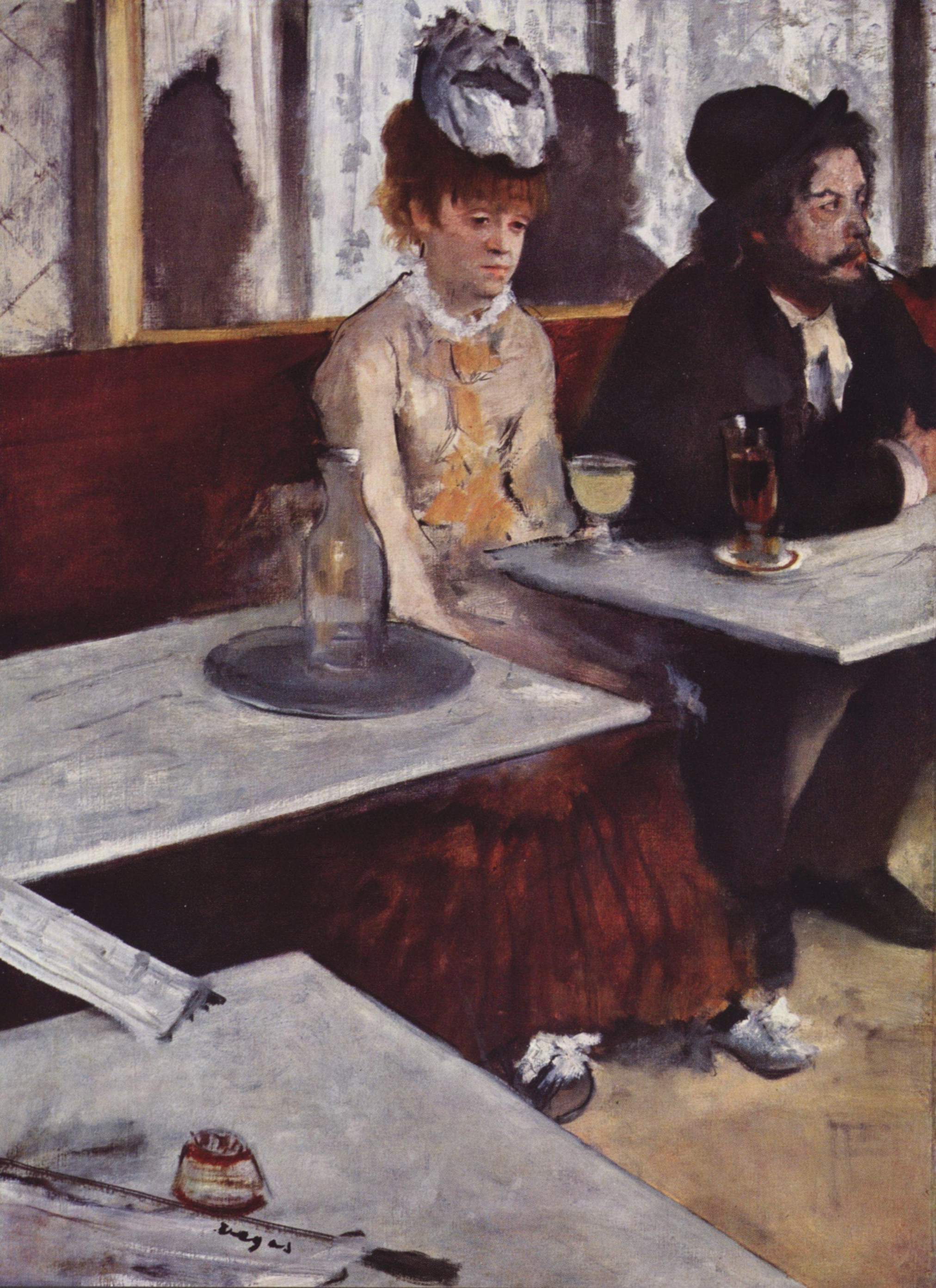
Image credit: Edgar Degas's L'Absinthe, 1876, will be featured in the Kimbell Faces of Impressionism show. Photo via Wikimedia Commons.
Welcome, Members of Parliament
Welcome, Members of Parliament. This blog is designed to act as a student forum for anyone enrolled in my classes at a Dallas-area proprietary college, former students, and/or others who find our conversations interesting. The Parliament will be moderated to ensure civility and relevance. The directions we take, the paths we follow, and the concerns we address are all up to you.
Showing posts with label art history. Show all posts
Tuesday, September 2, 2014
Tuesday, June 7, 2011
Spring Quarter Miscellany
Due to major lack of interest on my students' part, as well as lack of time on my own, I've neglected the Parliament for the entire quarter. Sudden needs for bonus points have emerged, however, and so to accommodate those who've been suddenly inspired to enhance their final grades, I'm offering up a couple of newsy bits that might be useful to some of you.
An old friend of my art and design history and humanities courses, Maggie Macnab (Macnab Design) recently presented a TEDx talk in Albuquerque, called "The Nature of Symbols." This should be interesting to anyone involved in design, advertising, branding, and any number of artistic pursuits.
I've frequently recommended Macnab's book, Decoding Design, to instructors and students alike, and her newest effort, Design By Nature, will be published later this year.
Here's one that goes to show you that taking art history classes might not be a complete waste of time. The Morgan Library & Museum in New York has launched an exhibit called Illuminating Fashion: Dress in the Art of Medieval France and the Netherlands, and the New York Times review of the show includes a nifty slide show with images from the featured manuscripts. Karen Rosenberg, who wrote the review notes that it "will teach you to scrutinize centuries-old manuscripts as you would a style magazine." For fashion history students, this approach seems made in heaven; not only can you find out what people wore when, but you might also be struck with inspiration for new and unusual designs based on centuries-old models. Aspiring rock singers could out-gaga Lady Gaga with information like this!
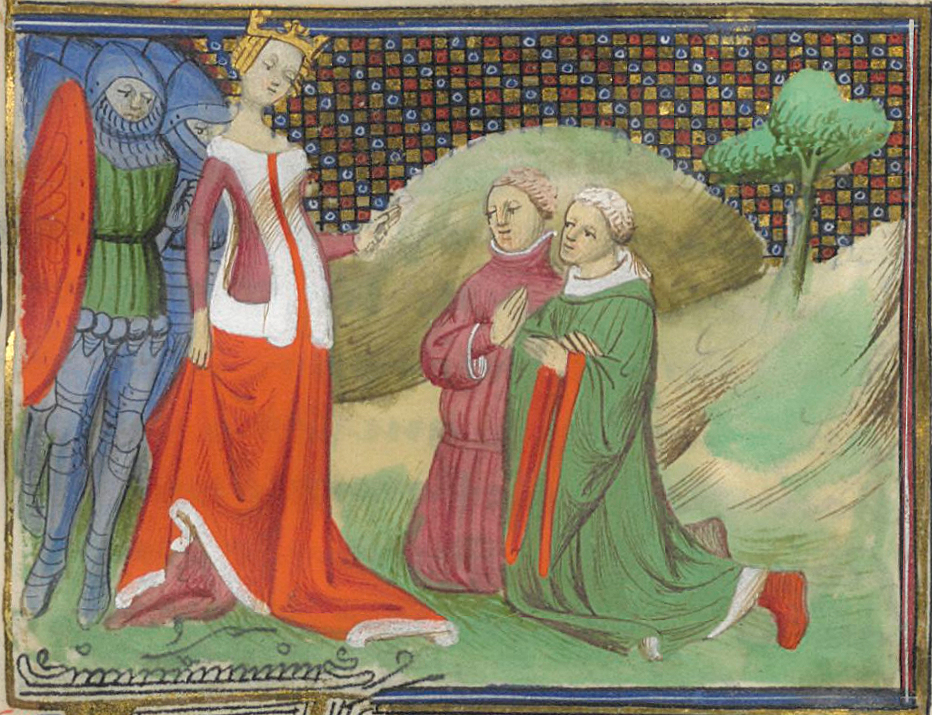
For further inspiration, try perusing the manuscript illumination images on Wikimedia Commons, where I found the image of Queen Isabelle of France at left. It's a 15th century painting by a guy known as "the Boethius Master" for the Froissart Chronicles.
This will undoubtedly be my last (as well as first) post for the quarter, so I hope everyone has a splendid summer vacation. I think we all deserve a bit of time off after having slogged through 22 weeks with only a seven-day break in the middle, and a couple of holidays that may have done more harm than good. Be careful out there!
An old friend of my art and design history and humanities courses, Maggie Macnab (Macnab Design) recently presented a TEDx talk in Albuquerque, called "The Nature of Symbols." This should be interesting to anyone involved in design, advertising, branding, and any number of artistic pursuits.
I've frequently recommended Macnab's book, Decoding Design, to instructors and students alike, and her newest effort, Design By Nature, will be published later this year.
Here's one that goes to show you that taking art history classes might not be a complete waste of time. The Morgan Library & Museum in New York has launched an exhibit called Illuminating Fashion: Dress in the Art of Medieval France and the Netherlands, and the New York Times review of the show includes a nifty slide show with images from the featured manuscripts. Karen Rosenberg, who wrote the review notes that it "will teach you to scrutinize centuries-old manuscripts as you would a style magazine." For fashion history students, this approach seems made in heaven; not only can you find out what people wore when, but you might also be struck with inspiration for new and unusual designs based on centuries-old models. Aspiring rock singers could out-gaga Lady Gaga with information like this!
This will undoubtedly be my last (as well as first) post for the quarter, so I hope everyone has a splendid summer vacation. I think we all deserve a bit of time off after having slogged through 22 weeks with only a seven-day break in the middle, and a couple of holidays that may have done more harm than good. Be careful out there!
Friday, December 3, 2010
Art History in the Movies: Hildegard of Bingen
History of Art & Design I students may remember, from our discussion of illuminated manuscripts, the image Hildegard of Bingen painted of herself receiving a vision. So you might imagine how pleased I was to read in the Daily Poop this morning about a new film, showing at the Angelika in Dallas, called Vision: From the Life of Hildegard von Bingen, and directed by Margarethe von Trotta. Here's a trailer (sorry about the German--but there are subtitles).
I always recommend seeing good films that help make the past more "present" to us, and the review of the film makes it seem promising. It looks like it focuses on her visions more than anything, but she was a remarkable woman and certainly deserves to be recognized by a broader audience than antiquated art history instructors and lovers of Gregorian chant.
If you are at all interested in Medieval music, you might also enjoy this YouTube version of her Kyrie Eleison:
Real fans of the genre can check out some of the best versions of Hildegard's music, recorded by Anonymous 4; my favorite album is 11,000 Virgins (samples are available at the link).
This just in: Painless (Art) History. I got a link to this YouTube page through my daily dose of Good. The perpetrators are history teachers, and much more familiar with pop music than I am. I'll probably show a couple in class, but you may want to check them all out before finals--no matter which of my classes you're in.
VISION: FROM THE LIFE OF HILDEGARD VON BINGEN: Movie Trailer. Watch more top selected videos about: Barbara Sukowa, Margarethe von Trotta
I always recommend seeing good films that help make the past more "present" to us, and the review of the film makes it seem promising. It looks like it focuses on her visions more than anything, but she was a remarkable woman and certainly deserves to be recognized by a broader audience than antiquated art history instructors and lovers of Gregorian chant.
If you are at all interested in Medieval music, you might also enjoy this YouTube version of her Kyrie Eleison:
Real fans of the genre can check out some of the best versions of Hildegard's music, recorded by Anonymous 4; my favorite album is 11,000 Virgins (samples are available at the link).
This just in: Painless (Art) History. I got a link to this YouTube page through my daily dose of Good. The perpetrators are history teachers, and much more familiar with pop music than I am. I'll probably show a couple in class, but you may want to check them all out before finals--no matter which of my classes you're in.
Thursday, September 9, 2010
Art, Science, Storytelling, and Life
I'm adding another TED lecture to your repertoire this week, namely one by Scott McCloud of Understanding Comics fame. Almost all of you should have encountered him by now, if not in your intro to design classes, or storyboarding, then in Writing II (or is it I?).
At any rate, I came upon it by accident when I was looking for TED lectures that might reference the Renaissance (one of the tags on the video, but not really referring to the actual period in art history). This turned out to be one of those wonderful moments of serendipity the web makes possible, because it's relevant to our class in several ways, even though it doesn't really have anything to do with the Renaissance.
One of the first things he does in his talk is to map out three kinds of vision: blind faith (things you believe in but can't see); stuff that's physically visible and thus manifest precisely because we can see it; and what's possible: what we can en-vision. These distinctions are useful, because they can help us talk about art through the ages, and begin to understand how people perceived art in different contexts.
Better yet are his principles for using vision: learn from everyone; follow no one; watch for pattern (where visions of the future begin to manifest themselves); work like hell.
Essentially what this leads to is a path toward innovation--making the new connections that make new stuff happen. In other words, it leads to creativity.
Later, in his discussion of the relationship between art and science, he notes a connection between vision and meaning that points directly to my lecture on the origins of writing: the rebus. Remember the rebus I showed you when we were talking about the origins of alphabets?

Well, this is a good example of the visual made audible--and the achievement of sound through vision. When you think about it, hieroglyphic writing systems depend on this marriage of the aural and the visual in order to make the transition that actually divorces sound from object.
One more thing: if you ever want confirmation that I'm not completely off my noodle about those infamous "rules of technological development," McCloud affirms at least one of them when he reminds us of the error Marshall McLuhan warned about: putting the content of new technology in the shape of the old. Or, according to Uhlmeyer's rule #312, "New technologies often follow the form of the old."
This video is longer than the previous one (about 17 minutes), so grab a snack and sit down for a few minutes. It's a bit dated (filmed in 2005), but quite enlightening nonetheless. Feel free to comment on interesting points you notice, or connections you make as a result of having watched.
Labels:
art and design,
art history,
comics,
rebus,
technology,
TED,
visual communication
Sunday, July 18, 2010
History is important; art is even more important.
The title of this post comes from one of my students; it was the best reply I got of the many written on the backs of the yellow index cards I distributed last week. I asked people to think about why it might be a good idea to take an art history class, and most of the responses were thoughtful if not entirely unpredictable. I was a bit surprised that so many were interested in understanding the continuity from past to present, and projecting it into the future. Although several quipped that they were coerced into taking the class (it's required in most programs), most seem to think that it wasn't a bad idea to know something about the history of their craft.The comments were also rather refreshingly hopeful, and a large number of them saw knowledge of art history as being important to them professionally: gaining a useful vocabulary, knowing what's already been done, being inspired by the works of great artists.
Another student remarked that "It's hard to make a future when you have no knowledge of the past." Now, this kind of insight is exactly what makes my little Borg-enhanced heart go pitty-pat. Many folks my age have noticed an almost terrifying a-historical bent among today's young people, so finding out that we're (at least in part) wrong actually makes us feel better about the future.
After going through a slide show that demonstrated several practical uses for art history, we went on during that first class to discuss the nature of art and its relationship to design. In all three sections of History of Art & Design I I got the sense that everyone really did see a point in the exercise--that learning about history can, in fact, be helpful to artists and designers in the present.
Time will tell, but I'm pretty optimistic about this quarter. I hope at least some of you will contribute to this blog and keep the conversation lively. Here's to ten more good weeks!
Subscribe to:
Posts (Atom)